
THE JUDEAN ALMANAC · ESSAYS
Domestic Alchemy
The visible inputs seem radically unequal to the result.
So Much Magic
I don't mind admitting it: growing up, I was happily obsessed with Harry Potter.
I read those novels day and night, carting them wherever I went. I made a hobby of writing obscure trivia questions to stump my friends and fellow fans, and found myself moved to tears (really) when enveloped in the atmosphere of Hogsmeade and Diagon Alley at Universal Studios in Orlando. When I think about where my habit of burning the midnight oil began, I invariably return to those many nights of my well-spent youth, tented beneath my sheets deep into the early hours with a flashlight and a good book, not unlike Harry himself. If I were a betting man, I could have made some decent money simply by pushing my chips in on the assumption that the book was one of the seven novels that I practically memorized through innumerable rereadings.
What so attracted me to those books? Perhaps nothing more than that I, like so many others, saw myself stepping into Harry's shoes and discovering that the world was full of so much magic—alive, untapped, waiting to be discovered.
None of this is to imply that I've outgrown that obsession. To the contrary: in growing up, I've discovered much of the magic I yearned for as a kid.
The most surprising discovery has been cooking.
If you think about it—and squint a bit—cooking is basically sanctioned potion-making. You throw a collection of ingredients into a vessel, apply heat, mutter under your breath, and, if you stick around long enough and they don't send the men in suits, you eventually get something that far outstrips what you put in.
Nowhere do I feel this more than with bone broth.
Bones. Water. Aromatics. Heat. The better part of two days over a low flame.
The visible inputs seem radically unequal to the result.
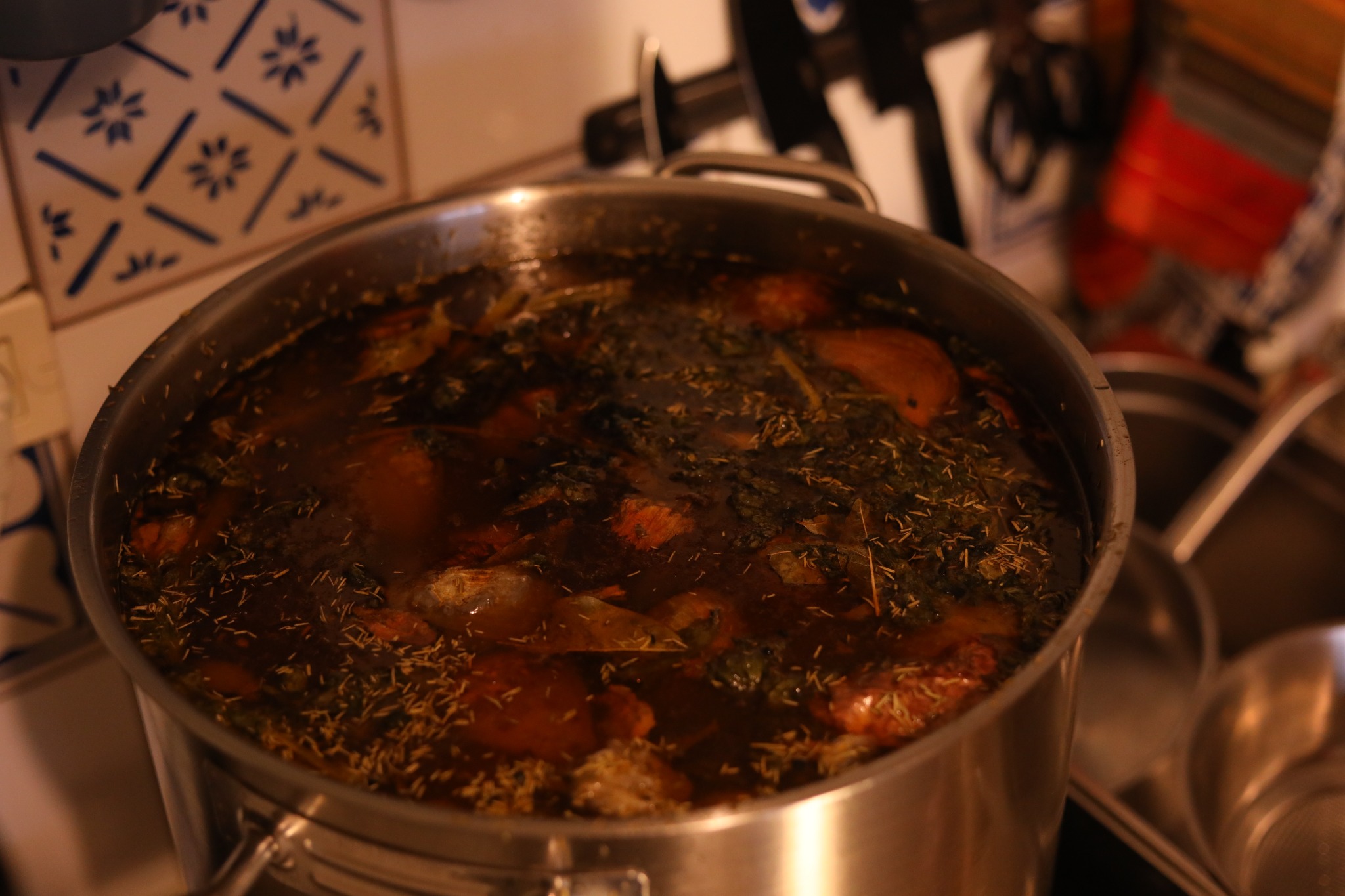
Crack the lid open at the start of the cook, and you could be forgiven for being unimpressed. The dominant character in the pot is water, followed closely by apple cider vinegar that has not yet had the decency to evaporate. The other flavors remain wallflowers, as yet unwilling to get to know one another.
And yet, within an hour or two, the room begins to smell tantalizingly beefy, and the rest of the home has begun to gravitate around this massive cauldron, which asks not for constant action but a watchman's regard.
Background Vigilance
Though a batch cooks for thirty-six to forty-eight hours, I am not hovering over the stovetop the entire time, personally encouraging the bones to give it their all. Most of the time I am elsewhere.
But somewhere on the back burner of my mind, there is always a stockpot simmering, producing steam and questions:
How long has it been going? How many hours until the vegetables go in? Is the heat right? When do I need to check it again? Am I processing this batch tonight, or first thing tomorrow morning?
The broth doesn't ask much from me, but it does need me to remember that it exists. It will happily continue transforming without my involvement, provided I have created the right conditions and return periodically to make sure nothing has gone wrong. Occasionally, something does.
The burner shorts. The broth over-evaporates. Liquid spills over the sides. Once, when I was still learning what temperature made a batch happiest, I set the heat too high and returned home to discover that the fat had leapt delightedly out of the pot and spattered itself across my kitchen backsplash.
This is what I mean by background vigilance.
Now that I know how to keep the pot reasonably content, I have also seen how the rest of the home comes to fall in line around it.
Counter space for the burner becomes non-negotiable. Errands acquire a return time. Other meals are cooked around, and in deference to, that great behemoth of a pot. The aroma is there when I go to sleep and waiting for me when I wake up, a constant reminder of what is coming together.
Yes, you can reduce all of this to water, bones, heat, and time. But the house feels different with it there.
Potions Master
Somewhere near the end of the first full day, the broth begins to cross over.
Before that, there is water, and there are things flavoring the water. The two remain distinct.
Then, at some point that I can recognize more easily than I can explain, there is bone broth.
The color has become rich. The smell has acquired complexity and distinction. The vinegar is no longer shouting over everyone else. The individual ingredients have given way to something that tastes wholly like itself.
Another half-day passes, perhaps another full one, and it continues to gather itself.
This is the stage that brings out the potions master in me.
I can tell from taste and experience what the pot needs. I know roughly where it is in the process by its color, smell, and flavor. I know when to add something, when to adjust the heat, and when the best thing I can do is leave it alone. I know its moods now. And I still find it faintly ridiculous that the whole thing works as well as it does.
That is where the magic lives for me: in my familiarity with the process, and in the fact that familiarity has never quite explained away the transformation.
The bones go in. The broth comes out.
I understand what happened between those two points. I was there every step of the way.
And still, some small part of me is delighted by the trick.
One Pot Done
And then...it's ready.
There sits the batch: several dozen liters of outrageously hot broth that need to be strained, cooled, portioned, frozen, and prepped for delivery.
Let's filter it. Let's cool it down. Let's get it into the freezer.
The strainers come out, and containers begin to populate my kitchen like rabbits. I need to get the broth strained, cooled, portioned, and stored before it gels—the timing is a game. Then comes another familiar game: Freezer Tetris, in which I discover that the available space is somehow several liters smaller than it was when last I checked.
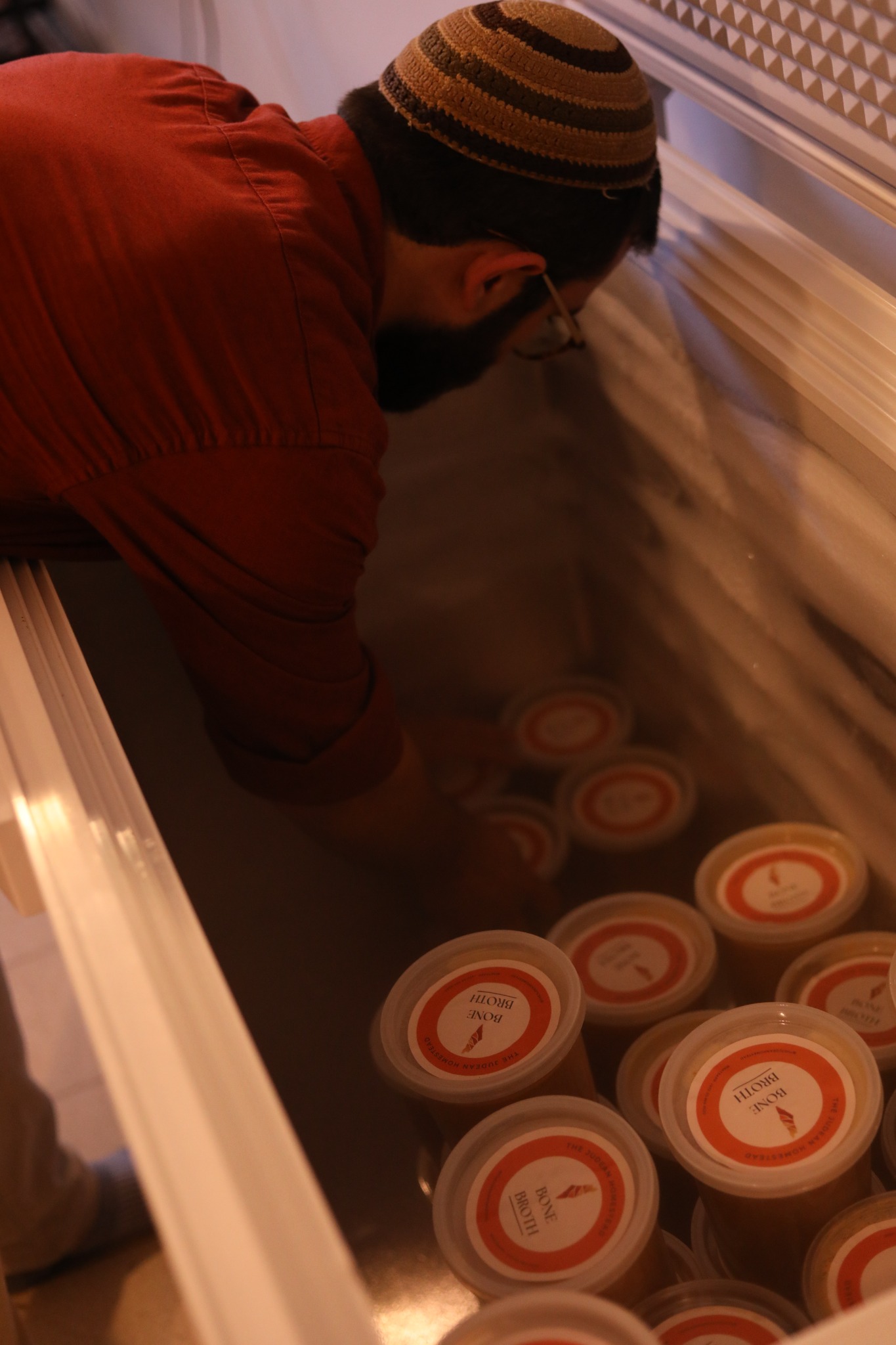
I may feel like a potions master while the broth is developing. Once it is finished, I am an ordinary man again, washing greasy equipment and negotiating with his freezer.
The finished pot does not leave much room for ceremony. Once broth-making became production, the end of one batch also became the beginning of the next sequence of work. The stockpot needs emptying because I will need it again. The bones and vegetables need clearing away. Everything needs cleaning.
Yalla. One pot done.
On to the next one.
As a child, I think I imagined that magic, if I ever found it, would feel extraordinary all the time.
But part of what I loved about Harry Potter was how ordinary magic had become inside that world. It was not all dragons, duels, and saving civilization. It was also homework, housework, cooking, and getting from place to place. Magic had worked its way into the furniture.
Magic doesn't always require ceremony. In fact, much of the magic I have found in adult life has become so woven into the ordinary and routine that I sometimes forget to notice it.
Then every so often, I lift the lid and remember that this rich, fragrant brew began as bones sitting in water and vinegar.
If I'm paying attention, I still find myself a little spellbound.