THE JUDEAN ALMANAC · AN INTRODUCTION
The Farm I Thought I'd Have
Which parts of the homestead dream can take honest form in this wondrous and unquiet city?
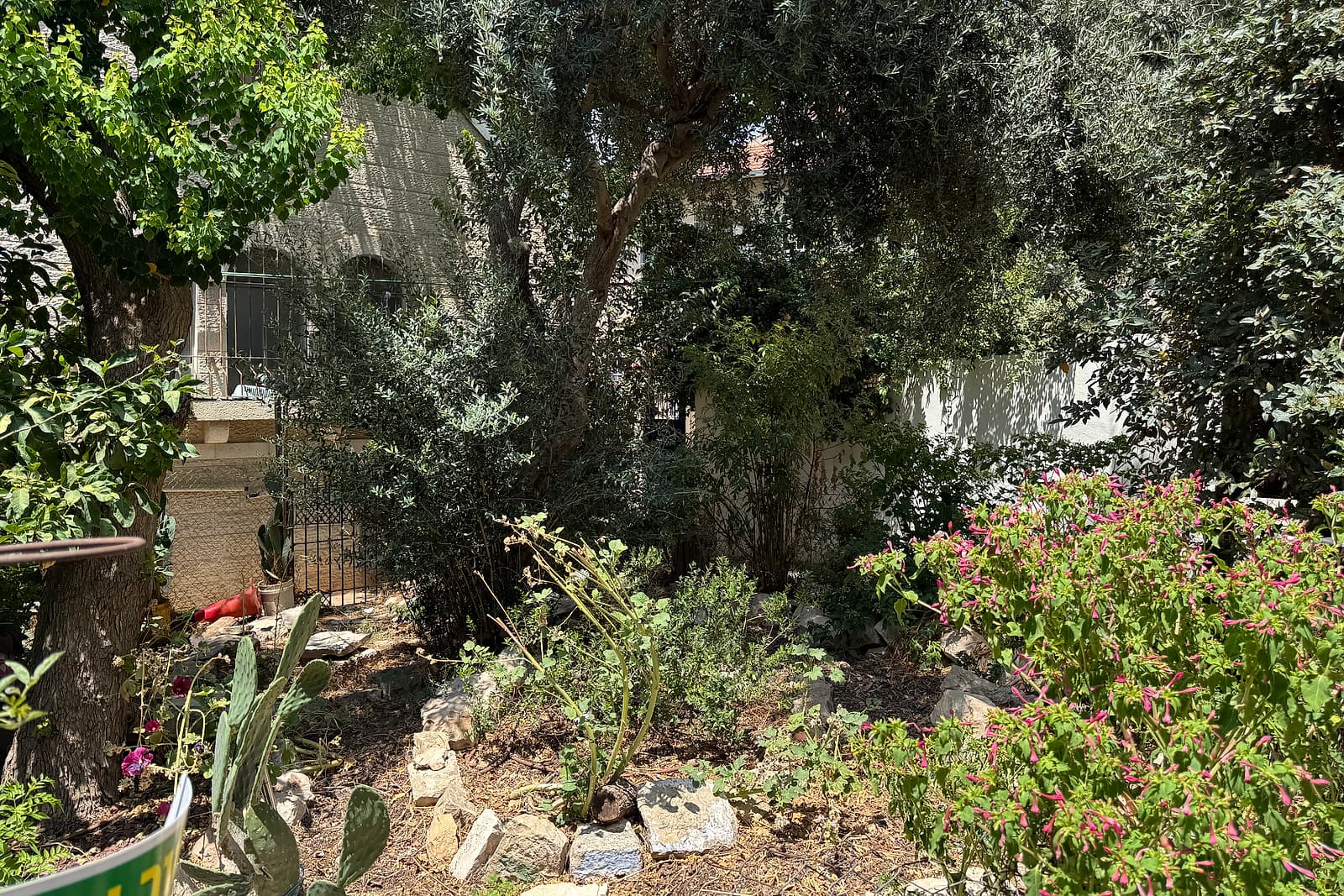
The Farm I Imagined
For a good number of years, I was fairly certain that I was going to live on a farm.
Not necessarily a large farm. I wasn't planning on leasing a tractor and becoming a major supplier of Israeli wheat. But I thought about the place enough to have a fully furnished fantasy.
There would be a vegetable patch. An orchard. Chickens strutting through their coop like queens, a sheen of pride in their feathers at the size and freshness of the eggs we would collect each morning for breakfast. I saw myself birthing calves which, after a quick jaunt through cognitive dissonance, I would gently and responsibly steward toward kosher slaughter and apportion among my family, friends and neighbors. There would be space for people to come and stay the night—perhaps even an inn, with long tables and meals which were somehow both humble and elaborate. My children would disappear outside for hours at a time, adventuring wild and free, always returning by day's end to collapse exhausted into bed before more of the same the next morning. I would walk the land in the mornings, checking on things and generally looking like a person who knew what he was doing. Somehow, I'd both be walking and sitting atop my palomino. Nevermind that I didn't know what a palomino looked like—it was my daydream, I liked the shape of the word, and I was going to use it.
It was a beautiful vision. Much of it was, I knew, rose-colored, and ungenerously vague about who, exactly, would be mucking out the chicken coop; somehow, that particular picture never took up much real estate in the fantasy. I knew I was imagining what the homestead meant, far more than the repetitive labor required to sustain it. But the essence of the thing, the feelings that it fertilized, I was eager to chase and make real.
Had my life turned differently, I might now be living on that farm. I might have been happy there.
I don't want to rewrite the past so that every road not taken becomes a road I never really wanted anyway. It's too convenient, and not true by half.
The truth is…I really wanted it.
I wanted the acreage. I wanted the animals. I wanted the elbow room. I wanted to host people in a place that felt both close to the earth and wide as the sky, where making room at the table didn't require grabbing an extra Keter chair from the stairwell of my apartment.
I wanted hospitality with roots.
That farm became my white whale: the imagined place onto which I projected nearly everything I thought a more direct, unmediated life might give me.
Then life, as it sometimes does, declined to follow the plan.
Jerusalem, Again
Those close to me know that in the autumn of 2025, I went through a season of personal upheaval that threw my life into a violent tailspin and changed nearly everything about what I did, where I lived, and who I was.
When I picked my head up in November to take stock, I found myself living in Jerusalem again for the first time in five years. More specifically, I found myself back in Nachlaot.
I had come to Israel eight years earlierI'd only ever been once before, when I was about nine, but remembered nothing at all of my time there other than fleeting images of crawling through the knee-deep water of the City of David tunnels, devouring Deathly Hallows, and juggling a diabolo in a playground in the Old City (I walk by the place sometimes and smile). It's fair to say I fell in love with Israel by way of Jerusalem. But it's likewise fair to say that I fell in love with Jerusalem by way of Nachlaot.
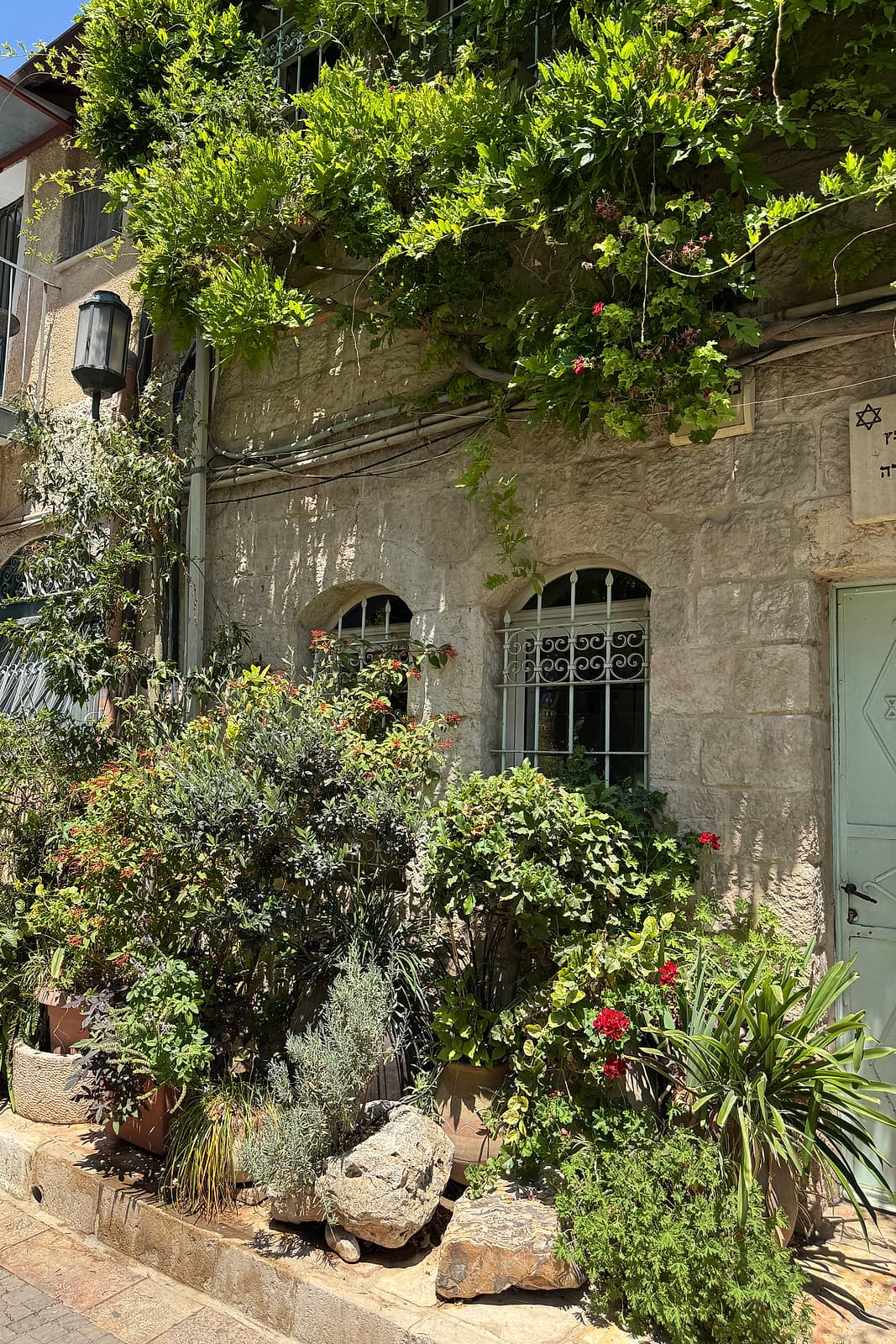
The narrow alleys. The cobblestones underfoot. Chance meetings with people I see nearly every day and people I haven't seen in six years. Walking along a street so quiet that it feels almost ghostlike, then turning a corner and being unceremoniously thrust into the glorious bedlam of Agripas.
From the moment I descended from that airport hasa'ah on Nisim Behar and followed a set of questionable directions through Byzantine sidestreets until I reached my aunt and uncle's home on Yosef Chaim Street at nineteen years of age, Nachlaot has called forth a particular version of me. A little more daring, a little more open. More willing to befriend strangers, negotiate, improvise, walk farther than intended and see where the evening goes.
Nachlaot is the first place in the world that not only gave me magic of its own, but made me feel like I'm capable of my own magic as well. In Nachlaot, I feel like myself.
What I don't feel like is a farmer.
Taking the Barn Behind the Barn, Sort Of
In moving back to Jerusalem, have I outgrown my homestead dream? I don't think so.
True, now that I'm back here in Jerusalem I have a hard time seeing myself living anywhere else, at least for quite some time. Almost every aspect of my vision is incompatible with any property I could call my own here in the city. And despite my needling, there's no chance my landlord is going to agree to my getting a horse anytime soon.
But that homestead dream, when I distill it down to its bones, might work just fine in a place like this. If not fully, then somewhat.
I grew up in a pescatarianCan we as a society collectively agree to retire this word and adopt the superior "vegequarian" instead? home where my mother cooked whole foods, composted, and instilled in my siblings and me a deep suspicion of pesticides, GMOs, and anything else that even whiffed of being Frankensteinian. I understood at a young age that food was important, and the process that produced it deserved my thoughtfulness. If a food was more likely to be considered engineered than cooked, it was to be avoided.
Years later, making bone broth became an unexpected continuation of that older instinct. After all, there's very little mystery in bones, acidity, aromatics, and a day-and-a-half spell on the stovetop.
Bone broth is one expression of a larger desire to live life more plainspokenly. Part of what that requires is having a conscious relationship with the circle of food.
Land. Rain. Animals. Farmers. Butchers. Drivers. Market vendors. Cooks. Households. Children.
The farm promised to make those relationships impossible to miss.
It also promised quiet, physical space, and a clear view of the horizon.
Jerusalem does not give me those things, at least not in any straightforward sense.
A Jerusalem apartment is not a farm, no matter how many jars I put to ferment on the counter. I cannot step outside and gather eggs. I do not own an orchard. There are no cattle grazing beneath my balcony, which is probably best for everyone involved.
This city cannot reproduce direct agricultural life, full stop. And part of what that means is that, while I haven't outgrown the dream, I am leaving some of it behind.
There is a part of me that wants silence, land, animals, and distance. And there is another part of me, just as alive, that wants crowded streets, ancient stones, unexpected conversations, and the feeling that something is about to happen.
You have to honor all parts of yourself, but not in equal measure and not at all times.
Or, to put it less grandly: you can respect every part of yourself without handing each one the keys.
For now, Jerusalem elevates the most important parts of me. It is the place where the capacities that feel most essential and sincere seem to come alive.
That "for now" matters. I am not a prophet, and I don't know where I will live for the rest of my life.
But for now, I am a Yerushalmi, through and through.
So with that said: which parts of the homestead dream can take honest form in this wondrous and unquiet city?
Building an Urban Homestead
Is it realistic for me to produce and preserve most, if not all, of my own food from within my apartment? Hopefully someday—certainly not now. So for the time being, I've set out to deliberately build meaningful relationships with the people, places, animals, seasons, and processes that bring food into my four walls.
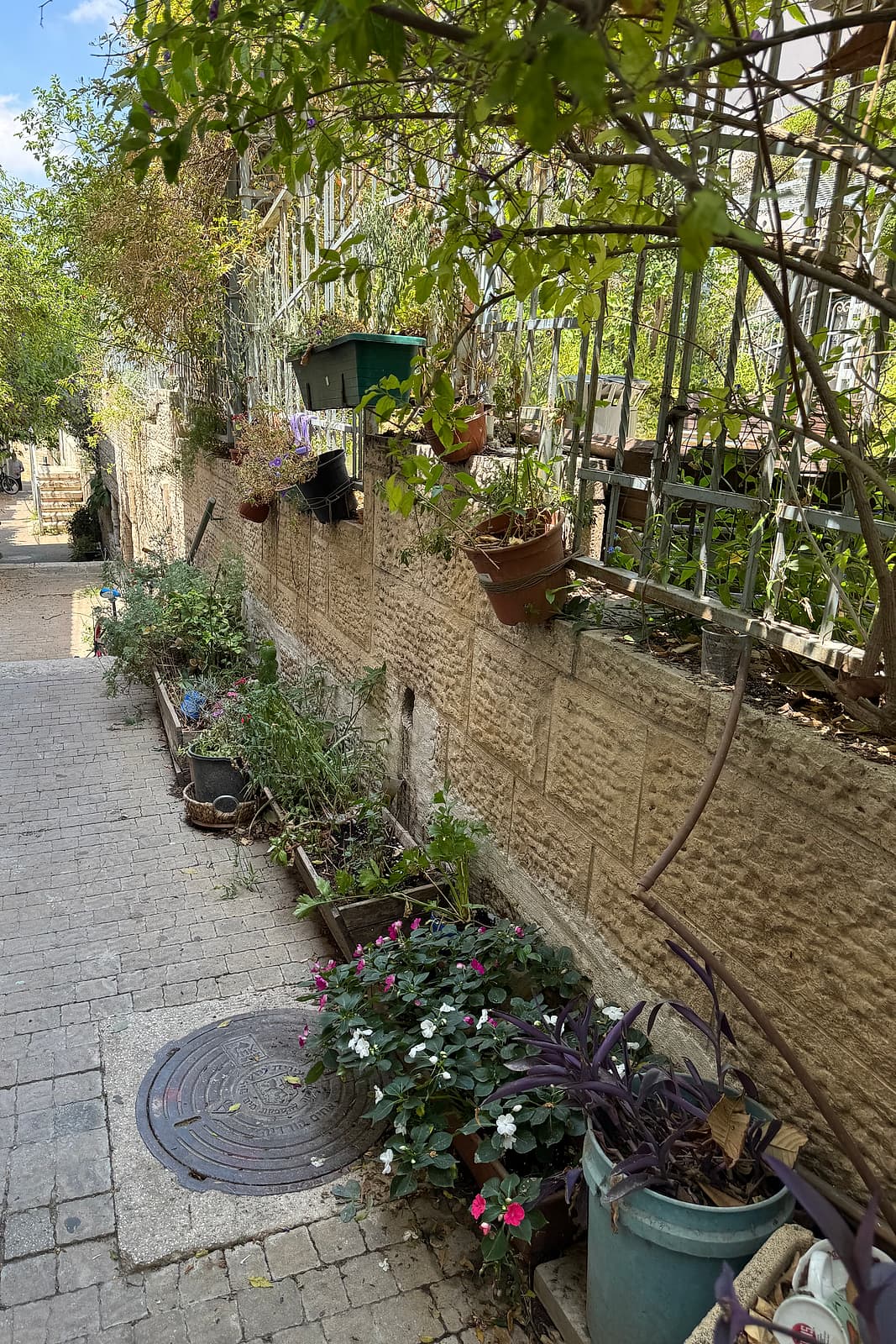
I try to know my farmers and purveyors and buy food whose origins can be traced, especially when I can visit the land where those animals or crops came from.
I cook in batches, fermenting, freezing, and preserving to avoid waste.
I've brought my children to farms and intend to bring them to more, so they can see that milk, meat, eggs, fruit, oil, and bread don't begin life on a shelf.
And I encourage you, my reader and friend, if you'd like to, to do the same.
None of the above is meant to be a purity test. Some weeks I am more attentive to these things than others. Some practices fit naturally into my current household, whereas others remain on the wish list of things I'll do when I've got an extra six hours each day and a balcony with at least partial sun.
I will not be the rustic model of a city-dwelling cow-puncher—not in this season, and perhaps not in this lifetime. But I can be more attentive to the nourishment that's keeping me alive and kicking, a more active collaborator with its envoys, and a more conscious and grateful servant of God.
The name "The Judean Homestead" no longer holds the promise of the farm I will one day build. The literal homestead may never be the right life for me.
What I've got instead is something more myself—something that, like me, is still growing and changing, fueled by the desire to forge stronger and stronger connections between the land of Israel, the food it yields, and the cities full of the people who love both.
So if you, like me, yearn to introduce more of the country into your city life—to live nearer to the source of the things through which we have been kept alive, sustained, and brought to this moment—then please, come join me as I explore what it means to bring my homestead dream to life amid the hubbub of central Jerusalem.
This is The Judean Almanac.